

Introduction
In today’s digital era, organizations generate and consume enormous amounts of data from multiple systems, applications, and business processes. As companies expand and adopt various enterprise solutions such as ERP, CRM, HR, and financial systems, maintaining consistent and accurate data across these platforms become increasingly challenging. Inconsistent, duplicate, and inaccurate data can lead to poor decision-making, operational inefficiencies, compliance risks, and increased costs.
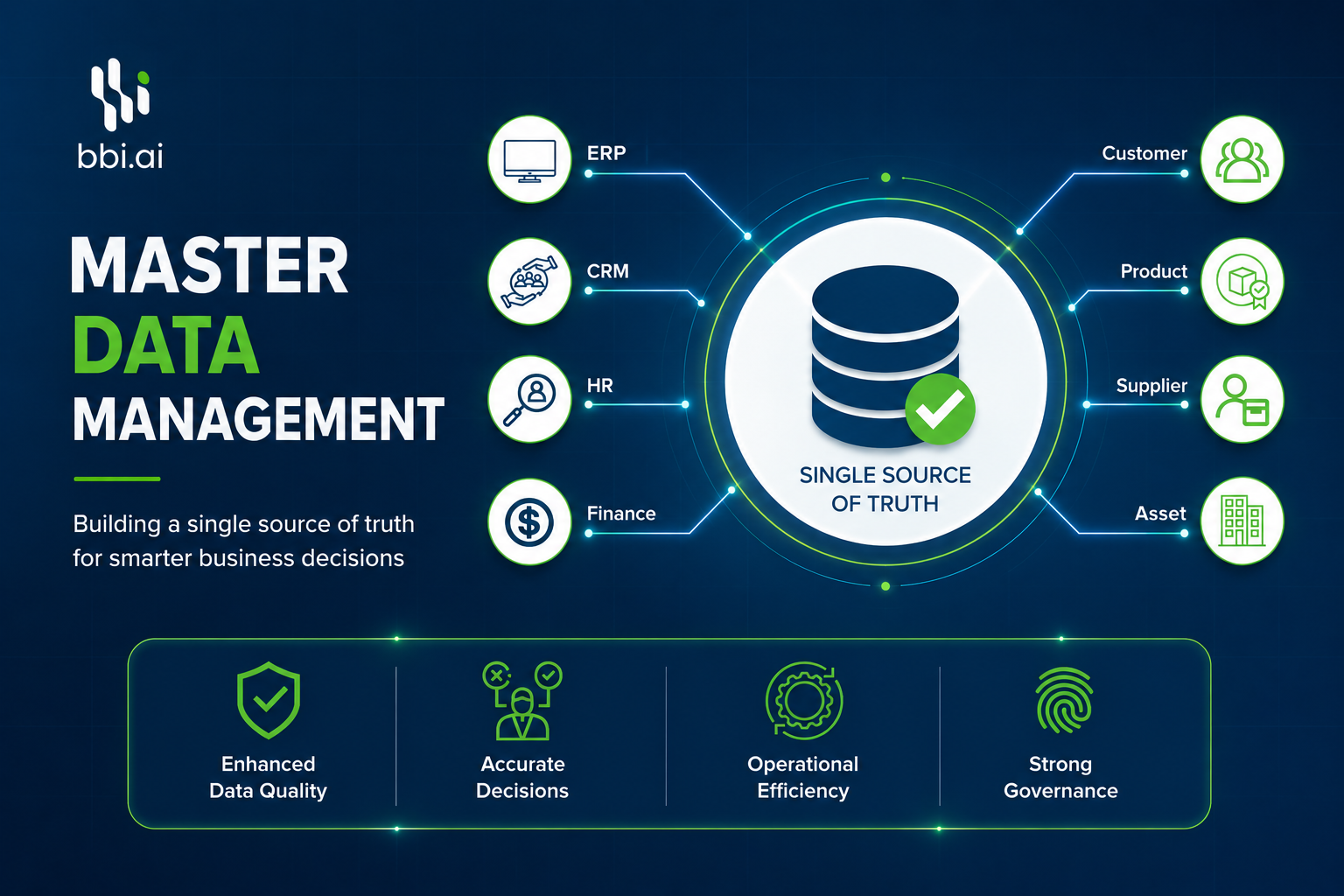
Master Data Management (MDM) has emerged as a strategic approach to address these challenges by providing a centralized framework for managing an organization’s most critical business data. Rather than allowing each system to maintain its own isolated version of important information, MDM establishes a single, trusted source of truth that ensures consistency, accuracy, and reliability across the enterprise.
This article provides an overview of Master Data Management, its importance, core components, benefits, implementation challenges, and its role in modern digital transformation initiatives.
What’s Master Data Management
Master Data Management (MDM) is the process of creating a single, reliable source of truth for an organization’s most critical information.
It links master data across different systems to eliminate duplicates and inconsistencies; By centralizing this data, MDM ensures that every department works with the same accurate and up-to-date records. Ultimately, it provides the high-quality data foundation needed for better decision-making and efficient business operations.
Master data represents the core business entities that are essential to your organization. This includes primary subjects such as customers, suppliers, products, and assets.
Beyond these main categories, master data also encompasses:
- Organizational Structures: Divisions, regions, and departments.
- Related Details: Critical child data such as addresses, phone numbers, and contact information.
Master Data Management Solution
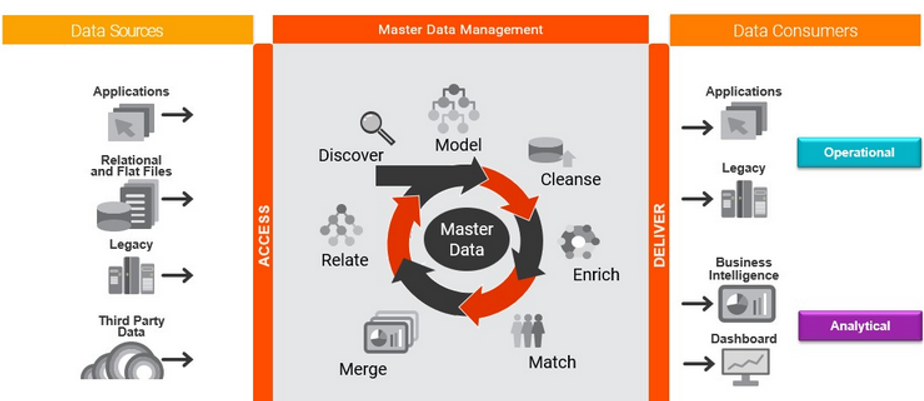
Data sources on the left provide raw data for MDM, several processes refine that data, and the resulting master data is made available to the consuming systems on the right.
Data consumers can access MDM data using real-time services. Data integration programs can move data from MDM to data consumers.
Discover: to delve into the source system data for MDM by creating data profiling reports and evaluating the results (using Cloud Data Profiling Service). Data cleansing and standardization can be determined.
Model: data is modeled for MDM to maximize the performance of load and match processing while still providing the business with the required data presentation.
Cleanse & Enrich: data needs to be cleansed and enriched before loading into MDM model (using Data Quality).
Match: MDM matching engine uses both exact and fuzzy matching logic to find potential duplicate records. Rules can be configured to allow fuzzy matching to have wide latitude or to be extremely tight depending on the business requirements.
Merge: depending on the quality of the match, records can be merged automatically, or tasks can be created to manually review each potential match. When records are merged the trust framework uses rules to ensure each field in the golden record has the best possible value.
Relate: create relationships and hierarchies between business entities.
MDM Methodology Phases
MDM Implementation tasks are grouped in 6 phases.
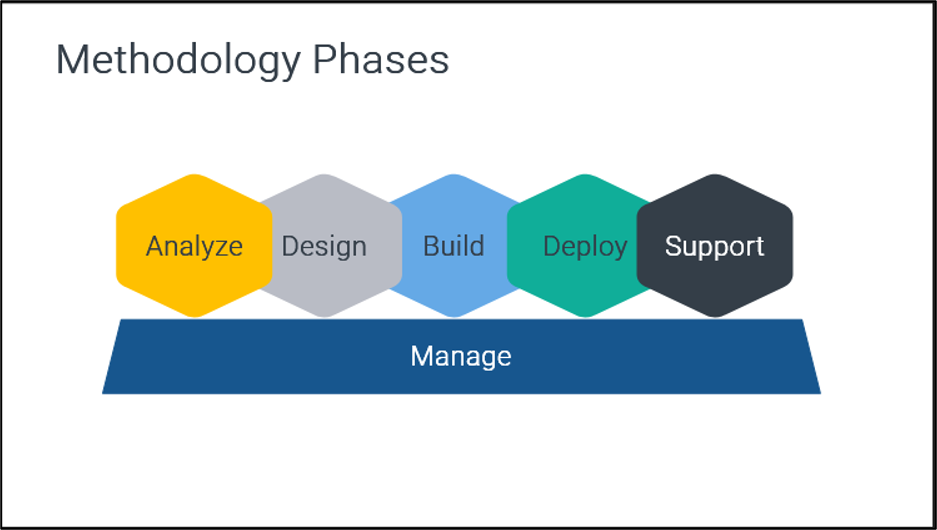
Manage: Oversees the entire project from start to finish to ensure success across all phases.
Analyze: Defines business requirements and priorities to set the foundation for the project.
Design: Outlines the technical architecture and lists all components needed for construction.
Build: Focuses on configuring the system, conducting tests, and gaining final acceptance.
Deploy: Moves the product into the live production environment for official use.
Support: Handles daily operations to ensure the system continues to run smoothly.
Benefits of Master Data Management
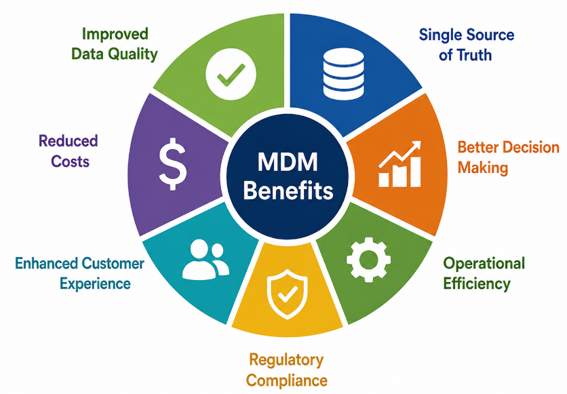
Implementing an effective MDM strategy provides numerous business and technical advantages.
Improved Data Quality
MDM ensures that information is accurate, complete, standardized, and validated before being shared across systems.
Single Source of Truth
A centralized and trusted version of data eliminates conflicting records and provides consistency across departments.
Better Decision Making
Executives and analysts can rely on accurate reports and dashboards generated from high-quality data.
Operational Efficiency
Employees spend less time correcting errors, searching for information, or reconciling conflicting records.
Regulatory Compliance
Accurate and governed data helps organizations comply with regulatory requirements and maintain proper audit trails.
Enhanced Customer Experience
Consistent customer information enables personalized services, faster issue resolution, and improved communication.
Reduced Costs
Eliminating duplicate records and manual reconciliation reduces operational expenses and increases productivity.
Conclusion
As enterprises continue to expand their digital ecosystems and leverage technologies such as cloud computing, artificial intelligence, and advanced analytics, the importance of reliable master data will continue to grow. Organizations that invest in effective MDM strategies gain significant competitive advantages through better governance, improved customer experience, and more informed business decisions.
Ultimately, Master Data Management is not merely a technology solution but a comprehensive business strategy that enables organizations to unlock the full value of their data assets and support sustainable long-term growth.