

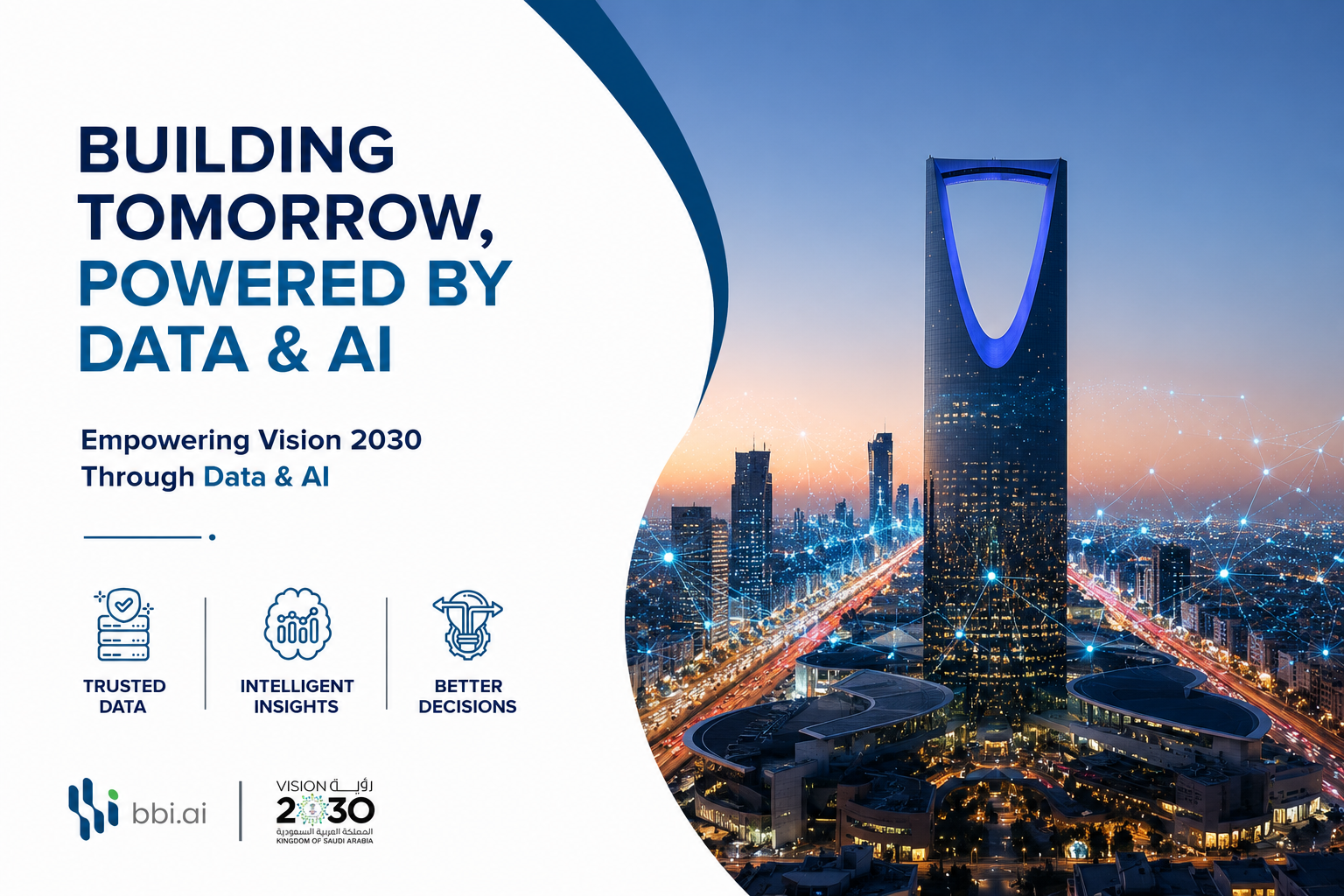
Saudi Vision 2030 is often associated with mega-projects, smart cities, and economic diversification. Yet behind every milestone, from NEOM and The Line to digital government services and AI initiatives lies a less visible but equally critical asset; data.
As Saudi Arabia continues its transformation into a diversified, innovation-driven economy, data and artificial intelligence (AI) have become essential enablers of sustainable growth. Organizations across the Kingdom are increasingly recognizing that achieving Vision 2030 requires more than technology investments; it requires trusted data, strong governance, and the ability to transform information into actionable insights.
Vision 2030: Transforming the Saudi Economy
Launched in 2016, Vision 2030 was designed to reduce dependence on oil, strengthen non-oil sectors, increase private-sector participation, and position Saudi Arabia as a global hub for innovation and investment.
Key Objectives of Vision 2030
- Diversify the economy beyond oil revenues
- Accelerate digital transformation across industries
- Increase private-sector contribution to GDP
- Attract foreign investment and innovation
- Develop world-class infrastructure and smart cities
- Create high-value jobs and empower local talent
Progress and Achievements
Over the past decade, Saudi Arabia has made significant progress toward its Vision 2030 goals. Major projects and strategic initiatives are reshaping the Kingdom’s economic landscape while creating new opportunities for growth.
- Expansion of tourism, entertainment, and logistics sectors
- Growth of non-oil economic activities
- Large-scale smart city initiatives such as NEOM and The Line
- Increased adoption of AI and digital technologies
- Growing private-sector participation
- Enhanced global competitiveness and investment attractiveness
Vision 2030 by the Numbers
- Non-oil activities accounted for 55% of Saudi Arabia’s real GDP in 2025, while non-oil government revenues increased by 170% compared to 2016 levels, highlighting the Kingdom’s progress toward economic diversification
- Saudi Arabia welcomed approximately 123 million visitors in 2025, surpassing its original tourism target of 100 million visitors ahead of schedule and prompting the Kingdom to raise its ambition to 150 million visitors by 2030
- The private sector’s contribution to GDP reached 51%, demonstrating the growing role of private enterprise in driving economic growth
- The Kingdom’s economy surpassed $1 trillion in GDP, supported by strong growth in non-oil sectors and continued investment in strategic industries
Source: Saudi Vision 2030 Annual Report 2025.
Why Data Is the Backbone of Economic Diversification
While infrastructure projects often capture headlines, data is one of the key enablers helping organizations operate more efficiently, scale effectively, and generate long-term value. Many of Vision 2030’s flagship initiatives increasingly rely on data-driven decision-making.
How Data Powers Vision 2030
- Trusted and accessible data
- Effective data governance
- Advanced analytics and reporting
- Artificial intelligence and machine learning
- Real-time operational insights
- Secure and scalable data platforms
From optimizing transportation networks and improving citizen services to enhancing tourism experiences and increasing operational efficiency, data has become a strategic asset that drives innovation and economic growth.
The Role of AI in the Kingdom’s Transformation
Artificial intelligence is accelerating transformation across industries by enabling organizations to automate processes, predict outcomes, improve customer experiences, and make faster, more informed decisions.
- Predictive analytics for strategic planning
- Intelligent automation and process optimization
- Generative AI for productivity and innovation
- Advanced forecasting and risk management
- Enhanced customer and citizen experiences
However, AI is only as effective as the data that powers it. Without reliable, well-governed data, organizations may struggle to achieve meaningful and sustainable AI outcomes.
Saudi Arabia’s National Data & AI Strategy
Saudi Arabia’s commitment to becoming a global leader in data and artificial intelligence is reflected in initiatives led by the Saudi Data and Artificial Intelligence Authority (SDAIA).
Through the National Strategy for Data & AI (NSDAI), the Kingdom is accelerating the adoption of data-driven innovation across government entities and the private sector while strengthening governance, digital capabilities, and AI readiness.
These initiatives reinforce a critical message: sustainable digital transformation requires not only advanced technologies, but also trusted, well-governed data foundations.
The Challenge Behind Digital Transformation
Despite significant progress, many organizations continue to face challenges that limit their ability to fully leverage data and AI.
Common Data Challenges
- Data silos across departments and systems
- Poor data quality and inconsistent reporting
- Lack of clear ownership and stewardship
- Limited AI readiness
- Fragmented technology ecosystems
- Difficulty establishing trust in enterprise data
Without addressing these challenges, organizations risk slowing their digital transformation efforts and limiting the value generated from their investments.
Why Data Governance Matters
Data governance provides the foundation required to manage data as a strategic asset. By establishing clear ownership, accountability, standards, and policies, organizations can improve data quality, strengthen compliance, and create the trusted data foundation needed for analytics and AI success.
How BBI Supports Vision 2030
At BBI, we help organizations build the foundations required for sustainable digital transformation and long-term business success. Through our expertise in data management, analytics, and AI, we support organizations in unlocking the full value of their data assets.
Building Trusted Data Foundations
- Data Strategy & Operating Models
- Data Governance & Stewardship
- Data Quality Management
- Master Data Management
- Enterprise Data Platforms
Enabling AI and Analytics at Scale
- Artificial Intelligence Solutions
- Advanced Analytics & Business Intelligence
- Modern Data Architectures
- Data Literacy & Organizational Enablement
- Enterprise-Wide Decision Intelligence
By helping organizations establish trusted data foundations, modern governance frameworks, and scalable intelligence capabilities, BBI enables faster innovation, better decision-making, and measurable business outcomes aligned with the goals of Vision 2030.
Looking Ahead
Saudi Vision 2030 is creating the conditions for a new economic era defined by innovation, resilience, and sustainable growth. As the Kingdom continues to expand opportunities beyond oil, organizations that embrace data-driven decision-making will be best positioned to lead the future.
Conclusion
Saudi Vision 2030 is not simply transforming industries; it is transforming the way decisions are made. Behind every smart city, digital service, AI initiative, and modern enterprise lies a common denominator; trusted data.
As Saudi Arabia continues its journey toward a diversified, knowledge-driven economy, organizations that invest in data, governance, analytics, and AI today will be the ones shaping tomorrow’s success. The future of Vision 2030 will not be built on infrastructure alone. It will be built on intelligence.
RELATED BLOG POSTS