
Picture a Monday morning leadership meeting at a regional bank. The CEO asks a simple question: “How many active customers do we have?”
Finance says one number. Marketing says another. Risk has a third, and it comes with a footnote.
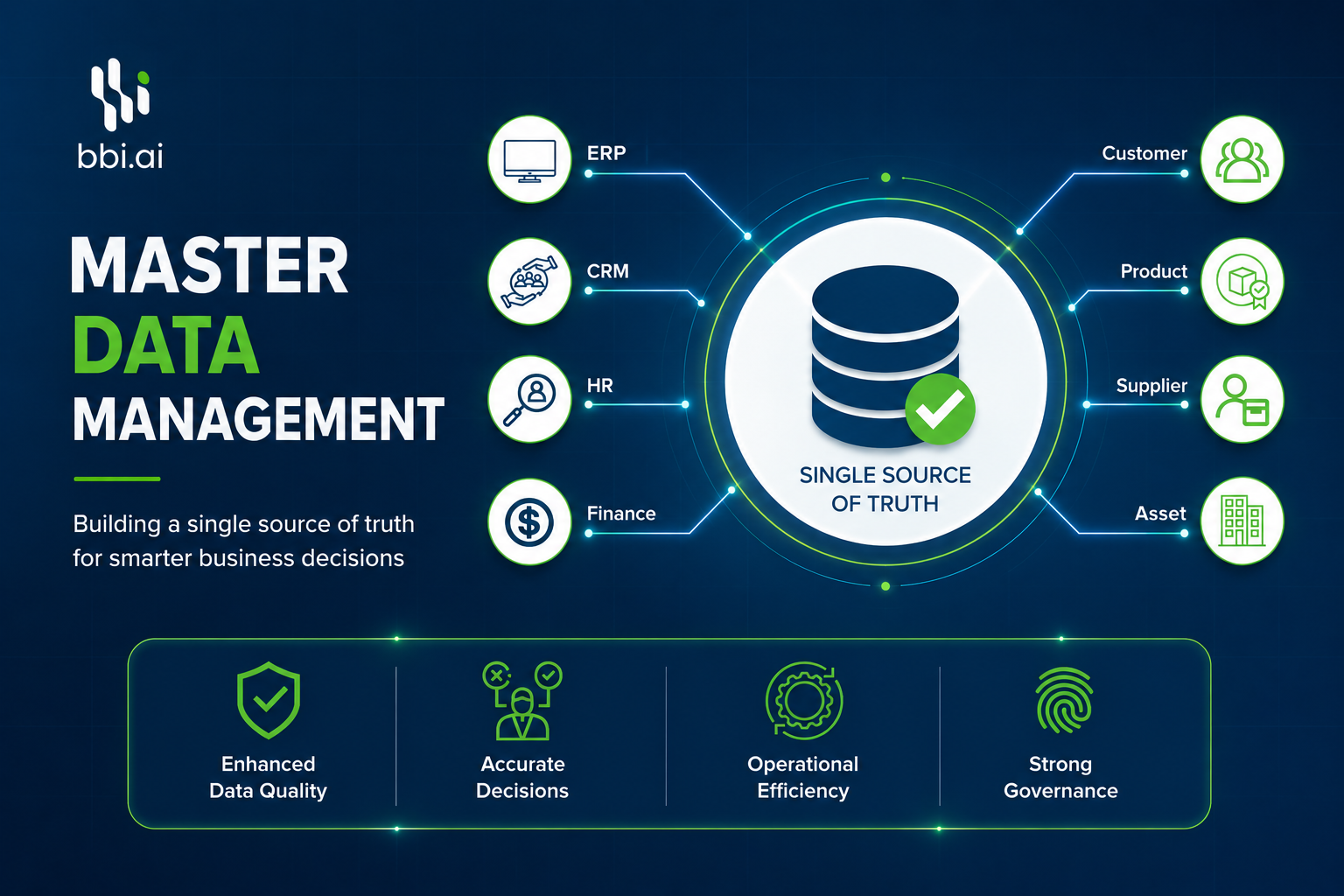
Nobody is wrong. Each team pulled its answer from its own system, with its own definitions and its own logic for what “active” means. That meeting isn’t really about customers. It’s about the organization’s data ecosystem, and whether it works for the business or quietly against it.
If this sounds familiar, you’re not alone. And the good news is that the way organizations build and run data ecosystems is changing fast.
What is a data ecosystem, really?
A data ecosystem is everything that makes data useful: the sources and platforms, the pipelines, the people who own and use the data, the rules that govern it, and the partners and technologies that connect it all.
For years, the goal was to centralize, move everything into one warehouse or one data lake and hope a single team could serve the whole company. For many enterprises, that approach created bottlenecks instead of answers.
The next generation of data ecosystems looks different. Here are five shifts shaping what comes next.
1. From one central lake to connected ownership
Organizations are moving toward models like data mesh, where the teams closest to the data (finance, operations, customer experience) own it and publish it as data products. These are reliable, documented datasets that others can find and use without filing a ticket and waiting weeks.
This doesn’t mean giving up standards. It means pairing distributed ownership with shared rules, common definitions and a platform everyone can build on. The result is faster access to information, and data that starts creating new business opportunities instead of sitting idle.
2. Trust becomes a metric, not a feeling
Most leaders don’t lack data. They lack data they can trust. In the future, data trust will be measured the way uptime or revenue is measured today: quality scores, lineage visibility, freshness and ownership coverage, all tracked on a dashboard.
That’s why data governance, data quality and metadata management are no longer back-office tasks. They’re the foundation for every analytics dashboard and every AI model the business will depend on.
3. Sovereignty by design
Across the Gulf, data regulation has moved from “coming soon” to “in force.” Saudi Arabia’s Personal Data Protection Law became fully enforceable in September 2024. The UAE’s federal data protection law has applied since 2022, and Qatar has had its personal data law since 2016.
For enterprises in banking, government, telecom, healthcare and utilities, this changes architecture decisions. Where data lives, who can access it and how it moves across borders now must be designed in from day one, not bolted on after launch. Tomorrow’s ecosystems will be hybrid and sovereign by design: in-country where it matters, connected where it’s allowed, and auditable everywhere.
4. AI becomes both a consumer and a caretaker of data
AI adoption in the region is already high: 75% of Middle East employees say they use AI tools at work, above the global average. But every AI initiative runs into the same truth: AI is only as good as the data behind it.
Two things are happening at once. AI is becoming the biggest consumer of enterprise data, from predictive models to GenAI assistants. At the same time, AI is becoming a caretaker of data. Agentic AI can monitor data quality, classify sensitive information, flag governance gaps and help keep documentation current.
The organizations that win will treat their data ecosystem and their AI strategy as one program, not two separate budgets.
5. Ecosystems need to be operated, not just built
Launching a data platform is the easy part. Keeping it healthy, adopted and improving is where many programs stall, especially as demand for data scientists and AI specialists in the Gulf keeps outpacing supply.
This is why more enterprises are shifting to managed data services and data & AI Centers of Excellence. These are ongoing partnerships that run, optimize and evolve the ecosystem, so internal teams can focus on using data rather than maintaining it.
Where does your organization stand? A quick self-check
Ask your leadership team these four questions:
- Strategy: Do we have a data strategy tied to business outcomes, or a collection of disconnected technology projects?
- Trust: Could we measure how trustworthy our most important data is today?
- Compliance: Is data sovereignty built into our architecture, or handled case by case?
- Sustainability: Once a platform goes live, who keeps it running, improving and adopted?
If any answer made you pause, you’re looking at the next step in your data journey.
The future is connected, trusted and AI-ready
The data ecosystems of the future won’t be defined by a single tool or platform. They’ll be defined by how well strategy, data management, AI and ongoing operations work together.
At BBI, that’s how we approach every engagement. We help organizations across Saudi Arabia, the UAE and Qatar move from data strategy to AI in production. We cover the whole journey: defining the strategy, building a governed and compliant data foundation, delivering AI and GenAI use cases, and running it all as a managed Data & AI Center of Excellence.
Because the question in that Monday meeting deserves one answer, and one you can trust.
Ready to assess your data ecosystem?
Talk to BBI’s data & AI experts → contactus@bbi.ai
Sources